


Retrofit and compact solutions: two complementary approaches to low-voltage grid digitalisation
Electrification, distributed generation and the growing adoption of electric vehicles are increasing the variability of power flows across low-voltage networks. For utilities, this makes granular information on loads, imbalances and feeder behaviour increasingly important.
The digitalisation of electrical networks enables measurement, monitoring and communication capabilities to be incorporated into secondary stations, but not every installation requires the same strategy. The condition of existing assets, the low-voltage panel architecture, installation constraints and the required level of monitoring all influence the most suitable approach.
In this context, retrofit solutions and compact solutions represent two complementary ways of progressing towards smarter grids.
Retrofit: digitalising existing infrastructure
Retrofit solutions make it possible to add new grid monitoring capabilities to existing infrastructure, reducing the need to replace assets that remain fully operational.
Within the Zillion ecosystem, the LRG | Feeder Retrofit Rogowski is designed for this type of deployment. Current measurement is performed using Rogowski sensors, enabling integration around existing conductors with minimal mechanical intervention.
The solution can also be installed without de-energising the installation, avoiding supply interruptions and reducing the operational impact of deployment.
This approach is particularly suitable when:
- the existing low-voltage panel remains operational
- measurement needs to be added to existing feeders
- continuity of supply must be maintained during installation
- digitalisation is being deployed progressively across secondary stations, feeders or network areas
- different configurations coexist within the same network
Retrofit solutions therefore make it possible to increase the level of supervision without necessarily replacing existing assets, while supporting scalable deployments across a large installed base.


Compact solutions: integrating more functions from the outset
For new installations or low-voltage panels undergoing renewal, it can be more effective to integrate digitalisation capabilities directly into the equipment design.
The SFS | Smart Fuse Switch Base follows this approach by integrating protection and sensing directly into the fuse switch base.
The SFS captures current by feeder and phase, together with the voltages associated with each feeder. These signals are processed by the TSA | Line Feeder Meter from Merytronic, which obtains the three-phase electrical parameters required to characterise feeder behaviour.
These include:
- voltage and current
- active, reactive and apparent power
- power factor
- frequency
- imported and exported energy
- RMS values
This architecture turns each low-voltage feeder into a measurement point integrated within the protection system itself, providing relevant information for grid monitoring, diagnostics and operation.
This approach can be particularly valuable when:
- a new low-voltage panel is being designed
- an existing installation is being renewed
- a more compact and streamlined solution is required in terms of space and wiring
Two approaches, one strategy
| Retrofit | Compact |
|---|---|
| Installed on existing assets | Integrated into the equipment design |
| Can be deployed without de-energising | Integrates protection and sensing |
| Supports a phased evolution | Simplifies the architecture of new installations |
There is no need to apply a single model across the entire network. A utility may use retrofit solutions in existing secondary stations while deploying compact solutions in new installations or refurbishment projects.
The decision will depend on the condition of the assets, installation constraints and the objectives of the digitalisation project.
The ability to combine technologies is one of the principles behind Zillion, Alive and Smart Grids by Gorlan: a modular and scalable architecture designed to integrate existing infrastructure and enable progressive digitalisation.
A grid architecture designed to evolve
This combination of approaches reflects the Zillion philosophy: a modular and scalable architecture that enables the progressive digitalisation of low-voltage networks while adapting to different grid configurations.
Sensing is only one layer of this architecture. Measurement, communications and future grid automation capabilities must be able to evolve in a coordinated way and integrate with utilities’ IT/OT systems.
Moving towards Smart Grids does not mean applying a single solution across the entire network. It means selecting the most appropriate architecture for each asset while ensuring that every deployment can become part of a common digitalisation strategy.



Related News
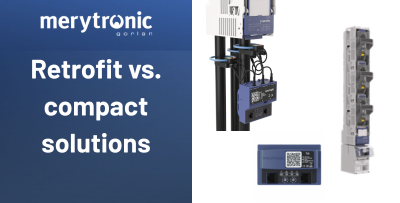
Retrofit and compact solutions: two complementary approaches to low-voltage grid digitalisation
Electrification, distributed generation and the growing adoption of electric vehicles are increasing the variability of...
From field identification to advanced supervision: Merytronic at Enlit Europe 2026
En Gorlan, hoy damos un paso decisivo hacia el futuro. Presentamos Zillion, nuestra nueva marca:...

Merytronic in New Zeland – EEA Conference 2026
Merytronic strengthens its technical presence in New Zealand at EEA 2026 Merytronic will participate in...

Dowloads
Access all the information about our products.

News
Retrofit and compact solutions: two complementary approaches to low-voltage grid…
Electrification, distributed generation and the growing adoption of electric vehicles…
From field identification to advanced supervision: Merytronic at Enlit Europe…
From 10 to 12 November, we will be in Vienna…
Merytronic in New Zeland – EEA Conference 2026
Merytronic strengthens its technical presence in New Zealand at EEA…


 Gorlan
Merytronic, a  company
- Electric network digitisation | Network topology
- Smart Grids | Zillion
- Maintenance: electricity distribution networks
- Electrical Safety | Cable Identifier
- Maintenance: underground piping networks
- Piping networks digitisation for Oil&Gas
- Merytronic Training Center
- R&D projects
